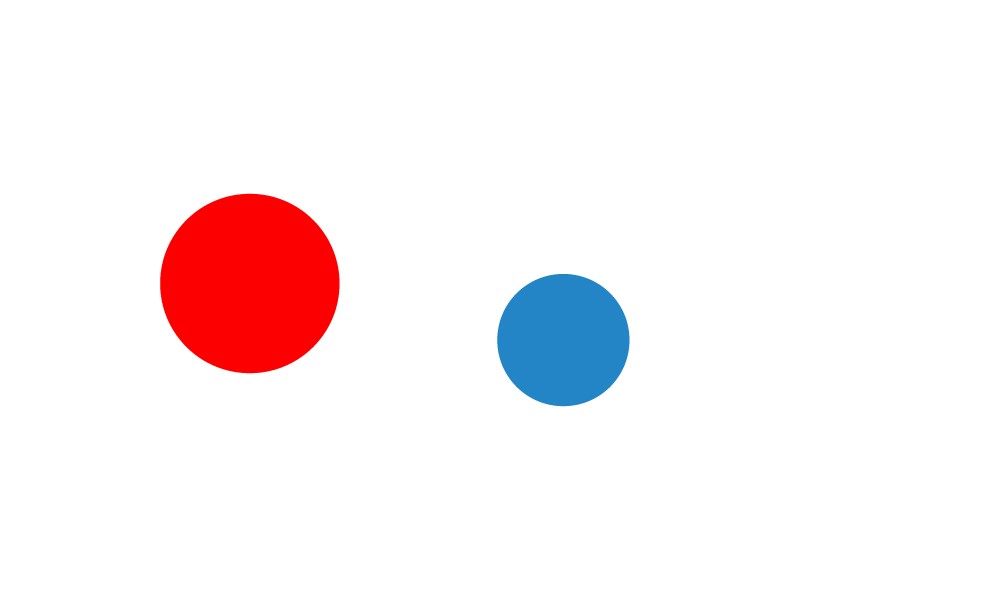
In the collective imagination, harmony is often synonymous with symmetry. We are naturally reassured by the perfect reflection, by these two halves that mirror each other with mathematical precision. It is a soothing stability, to be sure, but it is also a static stability. In my artistic practice, I seek precisely to break this calm to explore a more vibrant and human realm: asymmetrical balance.
Asynchrony as a Creative Force
Asymmetrical balance is not the absence of order; it is order in motion. For me, the concept of asynchrony is the cornerstone of this reflection. Unlike symmetry, which freezes the moment, asynchrony creates an interrupted dialogue, a series of shifts that force the eye to wander and the mind to question.
In my compositions, asynchrony acts as a driving force. It rejects the ease of the mirror in favor of tension. It is the constant search for what I call “simple complication”: a structure that seems obvious at first glance, but reveals an organic complexity the moment one pauses to look. It is the art of placing a form where one does not expect it, so that the void surrounding it suddenly becomes as heavy as the matter itself.
The Gravity of Forms and Colors
Working with asymmetry means learning to manipulate invisible forces. Every element I place on the surface possesses its own visual weight, its own gravitational force. A dark mass does not weigh the same as an ethereal line; a deep red does not occupy space in the same way as a muted gray.
The challenge of my approach is to find the tipping point. Imagine a scale where, instead of placing identical weights on each side, we shift the center of gravity. We contrast a large area of visual silence with a small point of extreme tension. The result is not chaos, but a suspended harmony. It is that moment of vertigo, just before the fall, that gives the work its vitality. The asymmetry keeps us on our toes; it prevents us from looking away too quickly.
A Dialogue Between Order and Chance
My approach draws on this tension between the rigor of form and the unpredictability of asynchrony. Paradoxically, creating an asymmetrical work requires more precision than reproducing perfect symmetry. One must know how to measure out the element of chance and master the imbalance so that it becomes intentional.
It is a constant dialogue between what is intended and what emerges from the process. When I compose, I seek to have each form “respond” to another without ever copying it. It is this asynchronous conversation that creates depth. We no longer seek perfection; we seek accuracy. And accuracy, in life as in art, is rarely found in exact repetition, but rather in the ability to adapt to opposing forces.
Asymmetrical balance is not the absence of order; it is order in motion: a harmony suspended just before everything tips over.
Asymmetry as a mirror of life
Why this fascination with imperfect balance? Because absolute symmetry is a figment of the mind, an abstraction. Nature, on the other hand, is fundamentally asymmetrical. The flow of a river, the growth of a tree, the features of a face: everything is made up of micro-shifts that create uniqueness.
By exploring asymmetry in abstraction, I seek to reconnect the viewer with this organic reality. My works are not static objects; they are ecosystems of forms in tension. They remind us that balance is not a permanent state, but a constant effort at readjustment.
Wearable Art: Asymmetry in Motion
This philosophy of asymmetry naturally extends to my object designs, which I like to call “wearable art.” Whether it’s a bag, a vehicle, or an accessory, the logic remains the same: to break the monotony through asymmetrical details. The object then becomes more than just a functional tool; it becomes a design piece that carries this visual energy within it. Wearing an asymmetrical piece means embracing a bit of this artistic tension within the fluid movement of our daily lives.
Conclusion: The Beauty of Discrepancy
Ultimately, asymmetrical balance is a celebration of freedom. It is a rejection of pre-established frameworks and easy solutions. By choosing asymmetry, I invite the viewer to actively engage with the work. It is up to them to find their own center of gravity when faced with my compositions, to navigate between the forms, and to feel that harmony that remains unspoken.
Art shouldn’t reassure us; it should set us in motion. And nothing sets us in motion more than the search for balance where everything seems to be pushing us toward the edge.

